


1、 Background and necessity of renovation
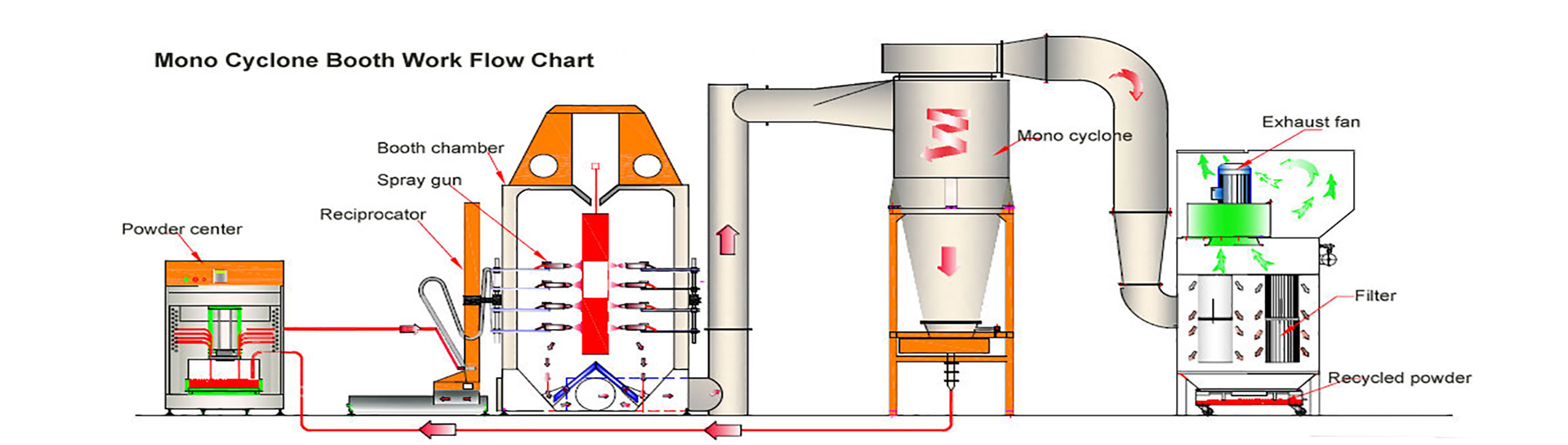
The traditional spray painting process generates a large amount of VOCs (volatile organic compounds) due to solvent evaporation, requiring the installation of end of pipe treatment equipment, resulting in high operation and maintenance costs. In addition, waste paint residue and waste solvents are hazardous waste, and disposal costs are high. In contrast, the powder spraying process adopts electrostatic adsorption technology, which significantly improves the utilization rate of powder, has no solvent volatilization, significantly reduces VOCs emissions, and does not require complex end treatment, meeting the needs of industrial green transformation.
2、 Key points of powder spraying assembly line technology
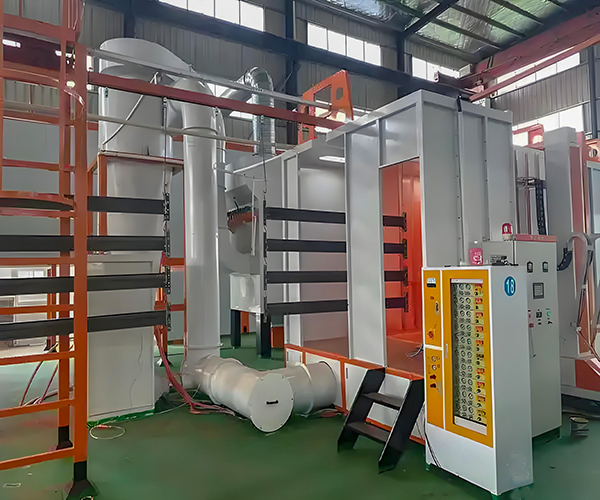
Pre treatment stage: By using automated pre-treatment equipment, the cleanliness of the workpiece surface is ensured, powder adhesion is improved, and the pre-treatment efficiency is significantly improved, resulting in a significant reduction in coating detachment rate.
Spray core equipment: equipped with intelligent electrostatic spray gun and closed-loop control system, combined with laser scanning technology to adjust the spray angle in real time, ensuring a significant increase in edge coverage, effective control of coating thickness deviation, and a significant improvement in one-time pass rate.
Curing and recycling: Infrared curing technology is adopted, which has a significant energy-saving effect compared to traditional processes. After filtering through the recycling system, the utilization rate of unattached powder is significantly improved, and the cost of powder raw materials is effectively reduced.
3、 Empirical Study on Environmental Protection and Cost effectiveness
Environmental benefits: Powder coatings can be recycled and reused, and the amount of hazardous waste generated is significantly reduced, resulting in significant environmental benefits.
Cost savings: By integrating materials, energy consumption, labor, and environmental protection, significant cost reductions have been achieved, with both material and energy costs effectively reduced.
4、 Typical Industry Application Cases
Automotive components: The wheels of a certain car model are made of specific polyester resin, which reduces coating costs, improves weather resistance, and lowers maintenance costs throughout the entire lifecycle.
Energy storage equipment: A certain energy storage base uses ultra weather resistant polyester resin, which reduces the amount of powder used, lowers the coating cost of a single device, and significantly extends its lifespan in specific environments.
Home appliance industry: After a certain home appliance enterprise switched to powder coating, the coating cost of a single product decreased, production efficiency improved, and delivery cycle shortened.
5、 Future Trends and Intelligent Upgrades
With the development of industrial Internet, intelligent powder spraying pipeline is integrating advanced algorithms to realize automatic optimization of spraying parameters. For example, by using visual sensors to monitor coating thickness in real-time and adjusting spray gun parameters based on data, the defect rate is significantly reduced. In addition, the research and development of new environmentally friendly resins will further reduce carbon footprint, adapt to international environmental requirements, and promote the penetration rate of powder coatings in more fields.
Conclusion
Changing from spray painting to powder spraying is not only a process replacement, but also an upgrade of the entire chain from materials, equipment to management. Through automation and intelligent transformation, enterprises can achieve multiple goals of environmental compliance, cost optimization, and efficiency improvement, and seize the opportunity in the wave of green manufacturing. In the future, with technological breakthroughs, powder coating assembly lines will evolve towards higher efficiency, lower energy consumption, and wider applicability, becoming the core support for sustainable development in the manufacturing industry.