


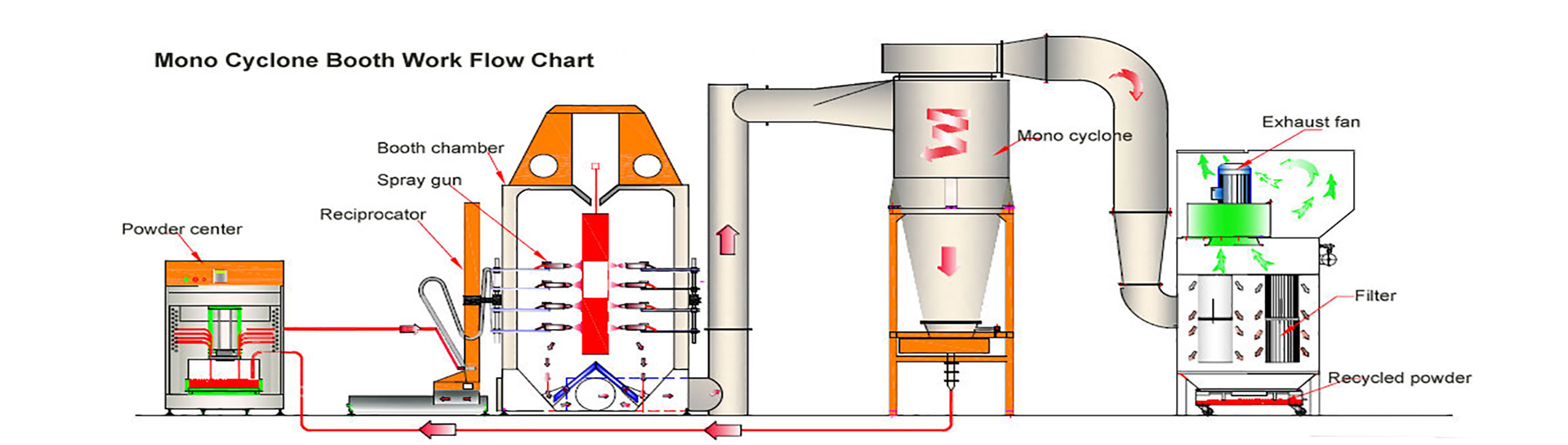
In the manufacturing industry, the spray painting assembly line is a key link in enhancing efficiency and ensuring quality. It has replaced the rough mode of traditional manual spraying. Through standardized and automated processes, it makes the surface treatment of products more uniform and durable, while reducing the reliance on labor and the environment.
In the past, painting was done by workers holding spray guns, which was inefficient and of unstable quality. When the shape of the workpiece is complex, manual spraying is prone to problems such as missed coating and sagging, and the rework rate is high. The emergence of the spray painting assembly line has changed this situation: after the workpieces undergo pretreatment such as cleaning and grinding, they are sent to the spray booth by a conveyor belt. The robotic arm adjusts the Angle and speed according to the preset program to ensure uniform coverage of the paint layer. Then it enters the drying area to cure the paint film. The entire process requires no human intervention, reducing errors and shortening the production cycle.
The core of an assembly line lies in the control of details.
Preprocessing is the foundation. Oil stains, rust or dust on the surface of the workpiece will reduce the adhesion of the paint layer. The assembly line usually adopts multi-stage cleaning: chemical degreasing and oil removal, high-pressure water gun flushing of residues, and finally drying or blowing to ensure dryness. For products with high cleanliness requirements (such as the shells of precision instruments), ultrasonic cleaning or plasma treatment will also be added.
The spraying process is crucial. The trajectory of the robotic arm needs to be designed in combination with the shape of the workpiece - for flat workpieces, it is sprayed at a uniform speed in a straight line, while for cylindrical or irregular parts, full coverage is achieved by rotating the workpiece or adjusting the Angle of the spray gun. The atomization effect of the spray gun is also of vital importance: appropriate pressure can make the paint droplets smaller and form a smooth paint film.
Drying and curing are the final steps. The drying of the paint layer requires a balance between speed and quality: if it is too fast, it is prone to cracking; if it is too slow, it is prone to dust accumulation. The assembly line sets the temperature and time according to the type of paint (such as water-based paint or oil-based paint). For instance, water-based paint is usually dried at 60-80℃ for 20-30 minutes, which can not only cure the paint film but also prevent the workpiece from deforming.
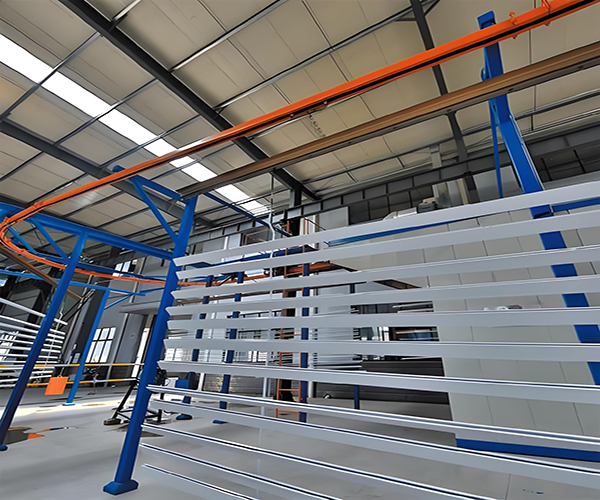
The advantages of the assembly line are not only reflected in efficiency and quality, but also in resource conservation and environmental protection. In manual spraying, approximately 30% of the paint is wasted due to splashing or over-spraying, while the assembly line increases the utilization rate to over 85% by precisely controlling the flow rate of the spray gun. In addition, waste gas treatment systems (such as activated carbon adsorption and catalytic combustion devices) can effectively capture volatile organic compounds (VOCs) and reduce pollution. From a long-term cost perspective, although the initial investment in an assembly line is high, the cost allocated to each individual product is lower. Take a medium-sized furniture factory as an example. After introducing the assembly line, the labor cost per piece of spray painting dropped from 5 yuan to 1.2 yuan, and the rework rate decreased from 15% to 3%. The overall benefits have been significantly improved.
In the future, spray painting assembly lines will develop towards intelligence and flexibility. Some assembly lines have introduced visual recognition systems to automatically detect the dimensions and defects of workpieces and adjust the spraying parameters. The Internet of Things (iot) technology enables remote monitoring and helps prevent faults in advance. Flexible transformation enables the assembly line to be compatible with more product types - by changing fixtures or adjusting programs, the same line can spray workpieces of different shapes and sizes, meeting the production demands of small batches and multiple varieties.
The spray painting assembly line is an "invisible" changer in industrial production. It replaces manual randomness with mechanical precision, resolves quality fluctuations with stable processes, and reduces environmental impact through technological iteration. In today's pursuit of efficiency and quality, this assembly line is still evolving continuously, providing solid support for the upgrading of the manufacturing industry.