


Introduction
In industrial manufacturing, the coating process is not only a critical step in product protection but also a core component in increasing added value. As one of the most advanced surface treatment technologies, electrophoretic coating lines provide uniform, corrosion-resistant, and environmentally friendly coating solutions for metal products through a highly automated process. This article will provide an in-depth analysis of the components, process flow, technical advantages, and future development trends of electrophoretic coating lines.
I. Core Components of Electrophoretic Coating Lines
1. Pretreatment System
Pre-cleaning: Use a high-pressure water jet or chemical solvent to remove large impurities such as oil, metal debris, and other surface impurities from the workpiece surface.
Degreasing and Rust Removal: Use an alkaline solution or sandblasting to thoroughly remove grease and rust to ensure substrate cleanliness.
Phosphating: Form a phosphate film on the workpiece surface to improve coating adhesion. A typical example is the phosphating process on the body of a well-known automobile brand, which increased paint film adhesion by 30%.
Multi-stage Water Washing: Constant running water rinses away acid and alkali residues. The final pure water wash ensures that the conductivity is controlled below 10μs/cm. 2. Core Electrophoretic Coating Equipment
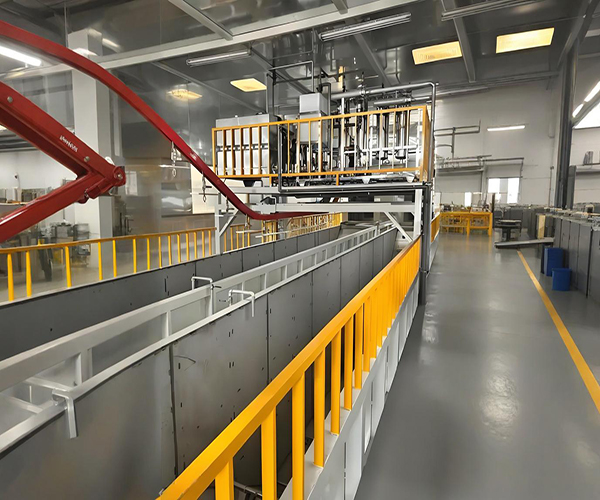
Electrophoretic Tank: Constructed of 316L stainless steel, it features a built-in anode system and maintains a controlled bath temperature of 28 ± 2°C. This system from a renowned international equipment supplier utilizes a modular immersion tank design, supporting an adjustable immersion angle of up to 60 degrees.
Ultrafiltration System: Filters the paint solution through a 0.1μm ultrafiltration membrane, achieving a 98% recovery rate. The permeate is used for post-rinsing.
Power System: Provides 100-450V DC voltage, with a controlled current density of 20-30A/dm² to ensure uniform coating thickness.
3. Post-Treatment System
Ultrafiltration Wash: Utilizes a three-stage countercurrent wash, with each stage controlled at a water pressure of 0.1-0.2MPa, effectively removing loose paint.
Drying System: Baking at 180°C for 30 minutes cross-links and cures the coating. A new energy vehicle manufacturer's models using this process have reduced VOC emissions by 60%. Quality Inspection: Film thickness is measured using an eddy current thickness gauge (≥35μm on the outer surface, ≥25μm on the inner surface). Salt spray testing is performed for ≥1440 hours.
II. Process Analysis
1. Automated Conveyor Chain
A combination of overhead suspension chains and ground-mounted skids achieves a conveying speed of 0.5-2m/min, ensuring precise transfer of workpieces between process steps. The system from a renowned international equipment supplier supports flexible capacity expansion from 7.5 to 30 units/hour.
2. Electrophoretic Deposition Process
Electrolysis: Water decomposes into H₂ and O₂ under an electric field. The pH must be controlled between 5.8 and 6.5.
Electrophoretic Migration: Negatively charged resin particles migrate toward the anode workpiece, achieving a deposition rate of up to 15μm/min.
Electroosmotic Drainage: The wet film shrinks and releases water, ultimately forming a dense coating. 3. Intelligent Control System
PLC programming enables full process monitoring. Parameters include:
Voltage: 60-400V step-by-step control
Bath temperature: 28±1°C
Conductivity: 800-1500μs/cm
Solids content: 18-22%
III. Technical Advantages and Industry Applications
1. Core Advantages
Coating Quality: Film thickness tolerance of ±2μm, salt spray resistance three times that of traditional spray coating.
Environmental Protection: Water-based coatings have a VOC content of <100g/L, complying with GB 30981-2020.
Efficiency Improvement: After implementation at a certain factory, single-line production capacity increased from 20JPH to 30JPH, with equipment utilization reaching 95%.
Cost Optimization: Paint utilization rate ≥98%, saving 30% of paint compared to traditional processes.
2. Typical Application Cases
Automobile Manufacturing: A well-known car brand uses cathodic electrophoresis, extending the corrosion protection period of its car bodies to 10 years. Home Appliance Industry: Electrophoretic coating applied to the exterior of a certain appliance brand has increased scratch resistance by 50%.
Construction Machinery: The boom of an excavator from a certain construction machinery company passed a 6,000-hour salt spray test after electrophoretic coating.
IV. Technological Innovation and Future Trends
1. Equipment Upgrade
Modular Design: A system from a renowned international equipment supplier supports on-demand expansion, reducing floor space by 40%.
Intelligent Inspection: An AI vision system can detect defects down to 0.1mm, increasing yield to 99.5%.
Energy Recovery: The RTO waste gas incineration system has a thermal efficiency of 85%, reducing CO2 emissions by 2,000 tons annually.
2. Material Innovation
Bio-based Coatings: A company has developed a plant-based electrophoretic paint with a 90% biodegradability rate.
Nano-Modification: Graphene-modified coatings have increased conductivity by 50% and extended their temperature range to -40°C to 150°C.
Functional Coatings: Self-cleaning nano-electrophoretic paint applied to building curtain walls achieves a hydrophobic angle of 150°. 3. Policies and Standards
Environmental Protection Regulations: The 2025 "Implementation Plan for Carbon Peaking in the Coating Industry" requires a 40% reduction in carbon emissions per unit of output value.
Safety Standards: New regulations from the Ministry of Emergency Management require explosion-proof electrical appliances to be upgraded to Ex ia IIC T4.
Quality Certification: GB/T 41204-2025 mandates 100% traceability of digital inspection data.
Conclusion
As a benchmark process in modern manufacturing, electrophoretic coating lines are continuously pushing the boundaries of application through technological innovation. From the modular systems of an internationally renowned equipment supplier to the green practices of a new energy vehicle manufacturer, from graphene coatings to bio-based materials, this technology not only defines new standards for surface treatment but also drives the entire industrial manufacturing industry towards intelligent and sustainable development. For companies striving for quality and efficiency, investing in electrophoretic coating lines is no longer optional but a must for building core competitiveness.