


In industries such as hardware, auto parts, home appliances, sheet metal, enclosures, and aluminum profiles, an increasing number of factories are transitioning from liquid painting to powder coating. While many business owners know that powder coating offers superior finishes and better environmental compliance, few fully understand its specific advantages or why it delivers a higher cost-performance ratio. Today, we break down the core advantages of fully automatic powder coating lines over traditional liquid paint to help enterprises understand this industry upgrade trend.
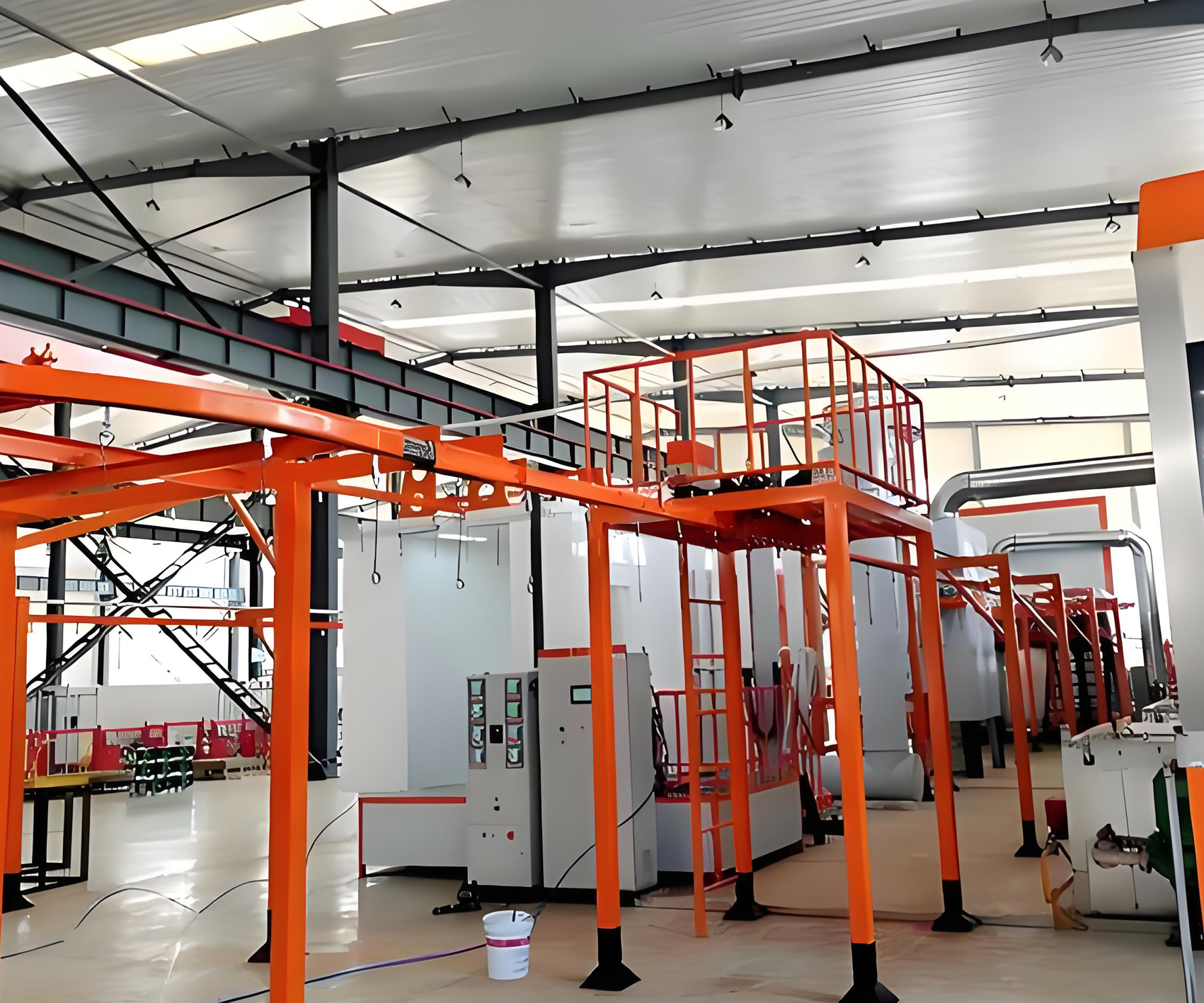
Powder coatings rely on electrostatic attraction and high-temperature melting/curing to form a highly dense and tough film that bonds firmly to the substrate. Compared to liquid paint, powder-coated products are highly impact-resistant, wear-resistant, and less prone to peeling. Adhesion consistently meets standards, while resistance to salt spray, acids, alkalis, and aging is significantly enhanced. This makes it ideal for long-term outdoor applications, structural hardware, and heavy-duty components.
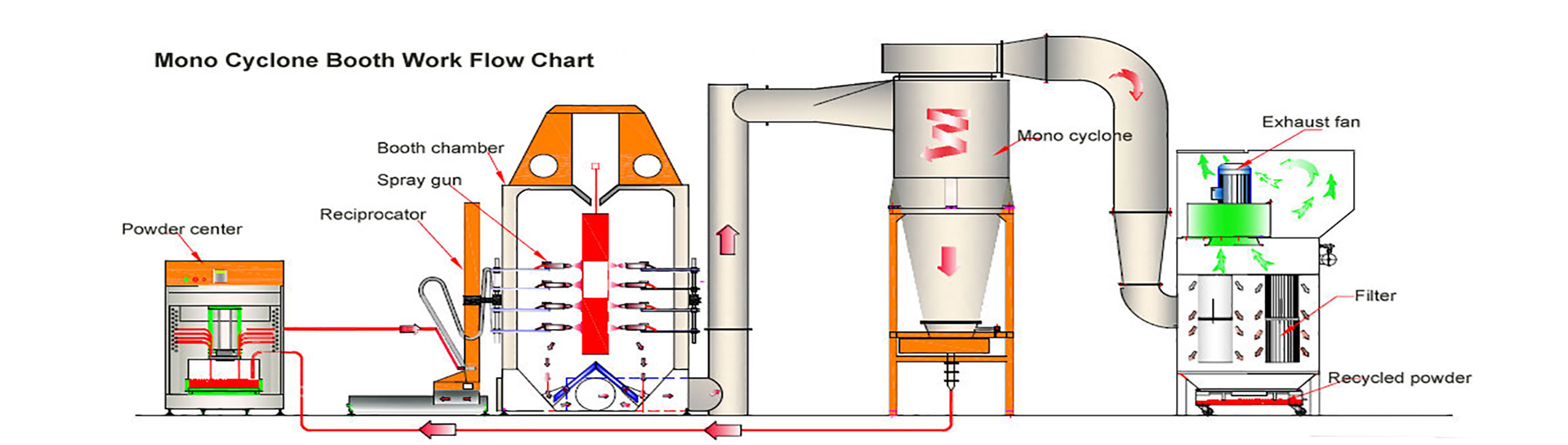
Traditional liquid paint utilization is only around 60%, with massive overspray waste. In contrast, standard fully automatic powder coating lines are equipped with cyclone separators and secondary cartridge recovery systems. Oversprayed powder is automatically recovered and recycled, pushing powder utilization to over 95%. Under continuous mass production, the monthly savings on powder materials are substantial, representing the biggest hidden advantage of powder coating.
Oil-based liquid paints contain large amounts of thinners and organic solvents, resulting in high VOC emissions, strong odors, and strict environmental inspections. Powder coatings are 100% solid content, solvent-free, and emit zero VOCs. This drastically reduces VOC generation at the source, minimizes workshop odors, and lowers exhaust treatment burdens, making it much easier to pass environmental impact assessments and routine inspections.
Liquid painting requires multiple coats and repeated drying; thin coats offer poor coverage, while thick coats easily sag. Powder coating can achieve a 60–120μm thickness in a single pass with strong hiding power, no substrate exposure, and no sagging. The surface is smooth and full, ensuring high consistency in batch production. Rework rates are far lower than with liquid painting, significantly boosting production efficiency.
Fully automatic powder coating lines enable automated electrostatic spraying, automatic powder recovery, constant-temperature curing, and continuous conveyor operations, perfectly adapting to high-volume, standardized production. Unlike manual painting, powder coating lines do not require highly skilled technicians. This low reliance on manual labor solves industry pain points such as hiring difficulties, labor instability, and inconsistent quality.
Summary
Compared to traditional liquid painting, powder coating holds comprehensive advantages in product quality, cost control, environmental compliance, and production efficiency, making it the mainstream upgrade direction in the coating industry. For businesses seeking more durable products, uniform appearances, lower production costs, and hassle-free environmental compliance, a fully automatic powder coating line is currently the most cost-effective upgrade solution.