


In the field of automobile manufacturing, powder coating lines are becoming the core process to replace traditional liquid coating due to their environmental friendliness, efficiency, and technological adaptability. Taking the matte powder coating used on the bumper of a certain German brand electric vehicle as an example, this process not only achieves controllable coating thickness and excellent weather resistance, but also solves the problem of plastic substrate temperature resistance through low-temperature curing technology, reducing component weight by 15% and improving stone impact resistance by 20%. Behind this technological innovation is the systematic application advantage of powder coating in automotive manufacturing.
1、 Core Process Architecture: From Electrostatic Adsorption to Intelligent Curing
The powder coating line is based on the core process of electrostatic spraying and high-temperature curing, forming three major technical modules:
Pre processing system: using sandblasting/shot blasting instead of traditional phosphating, combined with automatic spraying technology to complete workpiece cleaning and surface adjustment. For example, Shouda Automobile connects the roller through shot blasting machine with the electrostatic powder spraying line to achieve full automation of the entire process of cutting, welding, sanding, and spraying, greatly reducing manual intervention.
Spray coating system: Utilizing a high-voltage electrostatic field to evenly adsorb powder coating onto the surface of the workpiece, 3D trajectory scanning and adaptive spraying are achieved through a robot cluster. The thickness of a single spray can reach 40-50 μ m, reducing one layer of coating compared to traditional liquid coating and increasing production efficiency by 30%.
Curing system: Adopting infrared hot air composite heating technology, the curing time is reduced to one-third of traditional processes. The new low-temperature curing powder (below 120 ℃) has broken through the bottleneck of plastic parts application, combined with special primer to improve the adhesion of ABS/PP and other substrates, achieving the environmental protection goal of coating utilization rate of 95% and zero VOC emissions.
2、 Environmental Protection and Cost Advantage: The Quantitative Value of Green Manufacturing
In the context of the EU's 2025 VOCs emission limit (≤ 15g/m ²), the environmental advantages of powder coating lines are particularly prominent:
Zero emission characteristics: Powder coatings do not require solvents, and there are no exhaust emissions during the curing process. Compared to water-based coatings, they reduce VOCs by 95% and CO ₂ emissions by 60% compared to solvent based coatings.
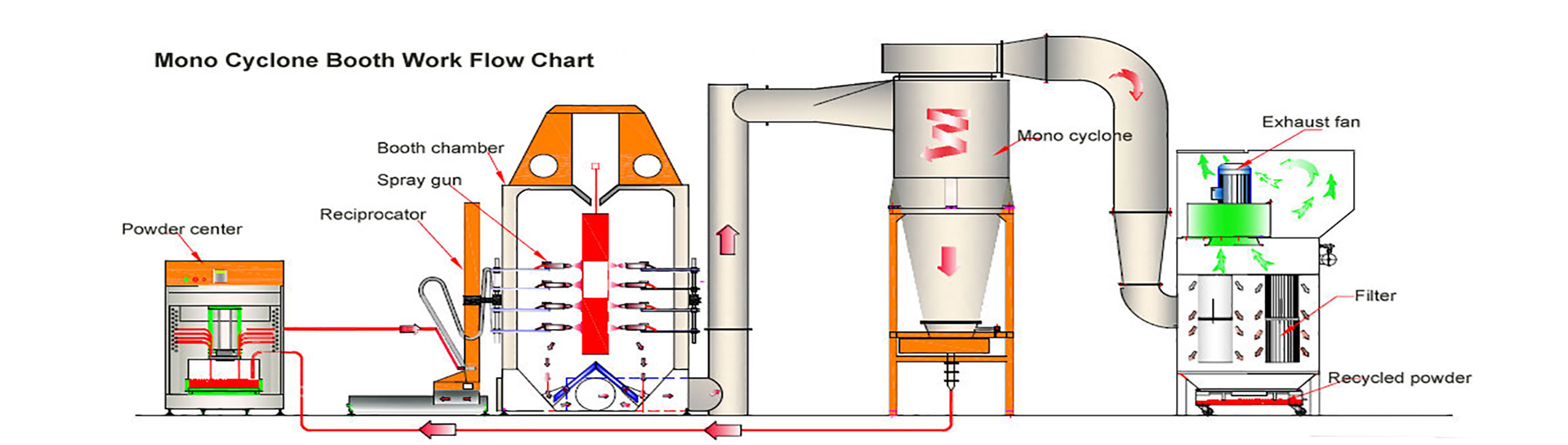
Resource recycling: Non attached powder is recovered through a cyclone separator with a recovery rate of over 98%. Combined with a waste heat recovery system, energy consumption is reduced by 50%. According to Haden's calculations, the cost of powder coating per vehicle is 6.3 euros lower than water-based coatings and 2.5 euros lower than solvent based coatings. Under large-scale production, the comprehensive cost is reduced by 15-20%.
Space and maintenance advantages: The spray booth occupies 40% less space, equipment maintenance time is reduced by 50%, and there are no paint film defects such as sagging and bubbles. The defect rate is controlled within 0.5%.
3、 Innovative application scenario: Full coverage from vehicle body to chassis
The powder coating line has formed a diversified application matrix in automobile manufacturing:
Vehicle body coverings, such as doors and engine hood, are coated with Interpon ultra weather resistant polyester powder to a thickness of 75-80 μ m, achieving twice the weather resistance of traditional liquid coatings, and supporting multi effect customization such as metallic texture and matte finish.
Chassis and structural components: The wheel hub, frame, and other parts are coated with double powder technology, with a salt spray resistance test lasting over 1000 hours and a 30% improvement in stone impact resistance. After the application of Shouda trailer, the overall anti-corrosion performance of the vehicle has been improved by 40%, and the service life has been extended to 15 years.
Plastic and composite materials: Through biobased powders (replacing petroleum components with vegetable oils) and UV curing technology, environmentally friendly coating of heat sensitive components such as instrument panels and grilles is achieved. The laser engraved powder coating developed by a Japanese company achieves a texture carving accuracy of 0.1mm on the surface of plastic parts.
Special functional coating: Antibacterial powder (silver ion additive) used for interior parts to inhibit microbial growth; The gradient powder process achieves a three-dimensional light and shadow effect on the car logo, meeting personalized design needs.
4、 Challenges and Future Trends: Technological Iteration Drives Industrial Upgrading
Despite significant advantages, the powder coating line still faces challenges such as high equipment costs and difficult technical adaptation:
Initial investment: The cost of automated powder spraying line equipment is 30% higher than traditional lines, but through large-scale production and long-term energy savings, the investment payback period is about 3 years.
Material innovation: Flexible powder coatings are suitable for the deformation needs of thermoplastic materials, and UV cured powders reduce energy consumption by 50% and are suitable for heat sensitive materials. It is expected that by 2030, the global market size of automotive plastic powder coating will exceed 8 billion US dollars.
Intelligent upgrade: Combining Industrial Internet of Things (IIoT) and AI algorithms, achieve coating thickness ± 3 μ m level control, real-time adjustment of curing temperature, and build a full process digital system from workpiece identification to quality traceability.
From the "armor" process of Shouda Automobile to the electric vehicle coating of German brands, the powder coating line is reshaping the coating standards of automobile manufacturing with its green, efficient, and intelligent characteristics. With breakthroughs in bio based powders, low-temperature solidification technology, and the popularization of smart factories, powder coating lines will not only be a response to environmental regulations, but also become the core engine driving the automotive industry to upgrade towards lightweight, personalized, and sustainable directions.