


Products Description
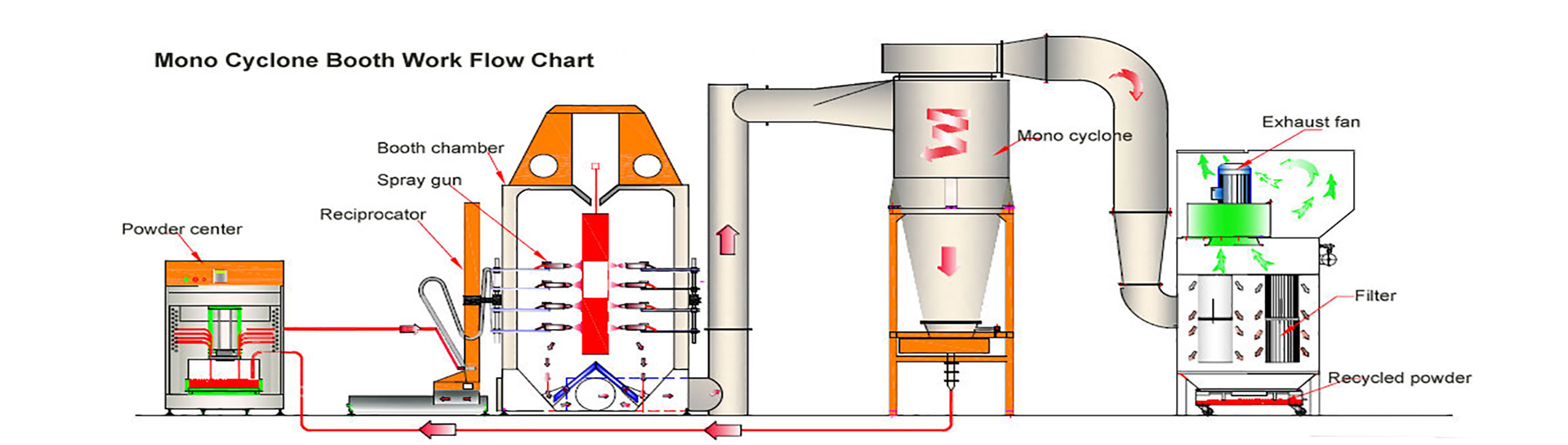
As a classic gas-solid separation equipment, cyclone dust collector has become an indispensable dust control equipment in the industrial field since its introduction in 1885, thanks to its efficient dust removal performance and economy. The core principle is to generate strong centrifugal force through the rotational motion of dusty airflow, causing dust particles to separate from the airflow and settle along the wall, ultimately falling into the ash hopper by gravity, achieving effective separation of dust and gas.
Core technological advantages
Efficient dust removal performance
Under normal operating conditions, the centrifugal force can reach 5-2500 times that of gravity, and the dust removal efficiency for particles larger than 5 μ m exceeds 90%. The multi tube parallel device can still maintain a removal rate of 80-85% for particles larger than 3 μ m.
Compared to gravity settling chambers, the efficiency improvement is significant, especially suitable for the pretreatment and main treatment of non viscous and non fibrous dust.
structure optimization
Adopting a dual-mode airflow design of tangential and axial entry, the latter increases processing capacity by three times under the same pressure loss, resulting in a more uniform airflow distribution.
The key components (dust collector diameter, air inlet, exhaust pipe) have been scientifically proportional optimized to balance efficiency and pressure loss (control range 500-2000Pa), ensuring stable operation of the equipment.
Adaptability to extreme working conditions
The main body can be equipped with special metal or ceramic materials, which can withstand high temperatures of 1000 ℃, high pressures of 5000Pa, and strong corrosive environments. It is widely used for flue gas purification in industries such as metallurgy, chemical engineering, and building materials.
Product features and application scenarios
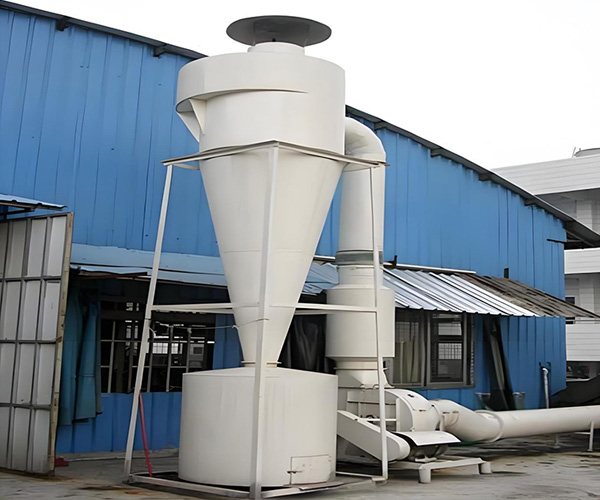
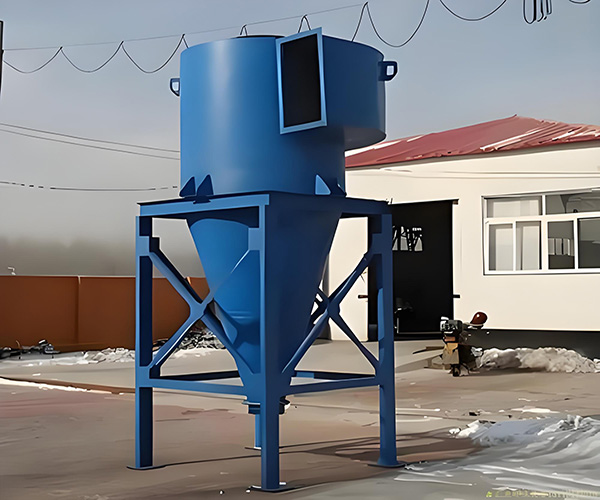
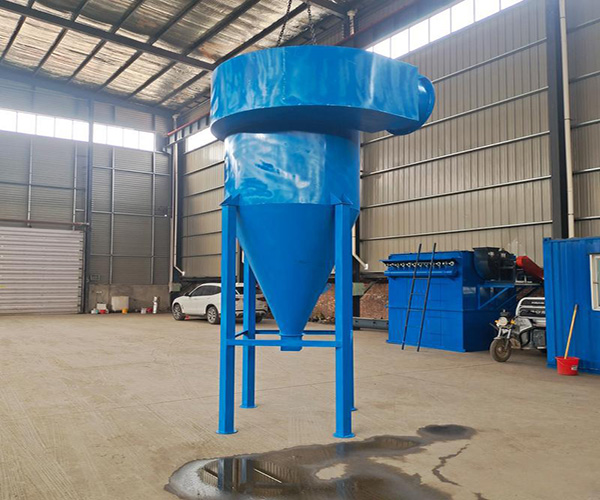
Simple structure, economical and durable: composed of intake pipe, exhaust pipe, cylinder, cone and ash hopper, with low manufacturing and installation costs, convenient maintenance, and significant long-term operating cost savings.
Multi scene coverage:
Boiler flue gas dust removal: efficiently removes large particulate pollutants and reduces subsequent processing load.
Multi stage dust removal system: As a preprocessing unit, it extends the lifespan of equipment such as bag filters.
High temperature process purification: It performs excellently in the treatment of high-temperature flue gas such as cement kiln heads and metallurgical melting.
Technical parameters and selection suggestions
Processing particle size: Mainly targeting particles larger than 5 μ m. For fine particle scenarios, it is recommended to combine wet dust collectors or electrostatic precipitators to form a composite system.
Pressure loss: The typical control range is 500-2000Pa, and energy consumption and efficiency need to be balanced according to the operating conditions.
Material customization: Hastelloy alloy is recommended for corrosive media, and ceramic lining is selected for wear-resistant working conditions.
Why choose a cyclone dust collector?
As the benchmark of efficiency in mechanical dust collectors, cyclone dust collectors have become the preferred solution for industrial dust control due to their characteristics of "low cost, high reliability, and wide adaptability". Whether it is a single device or a multi tube parallel system, modular design can meet the needs of different scales, helping enterprises achieve a win-win situation of environmental compliance and economic benefits.
conclusion
From the industrial revolution of the 19th century to modern green manufacturing, cyclone dust collectors have always driven industrial upgrading with innovative technology. Choose a professionally designed cyclone dust removal solution to make dust control more efficient, economical, and sustainable.
Tags: Efficient cyclone dust collector
Technical parameter
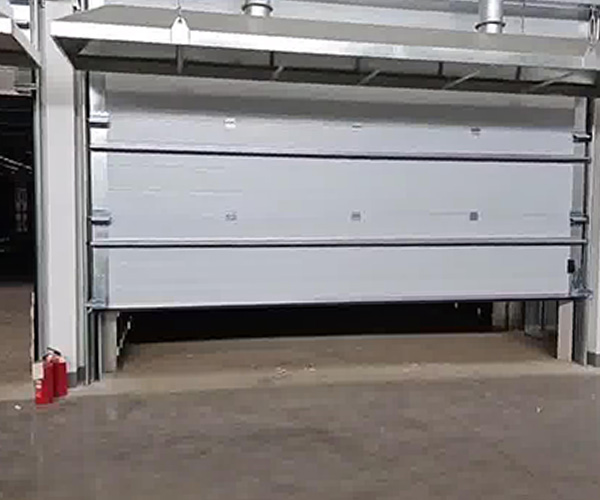
High-temperature curing furnac
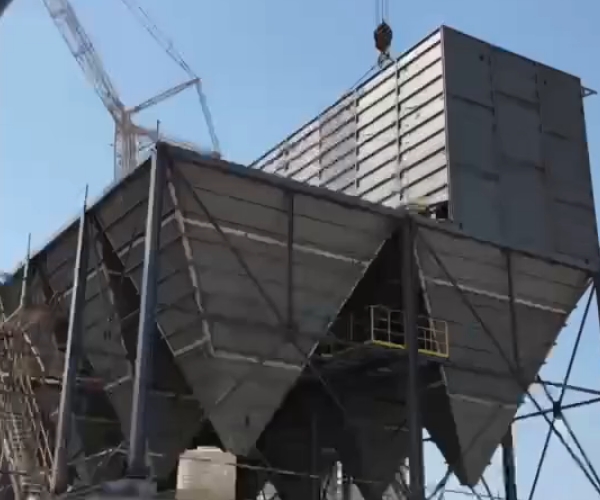
Large scale dust collector ins
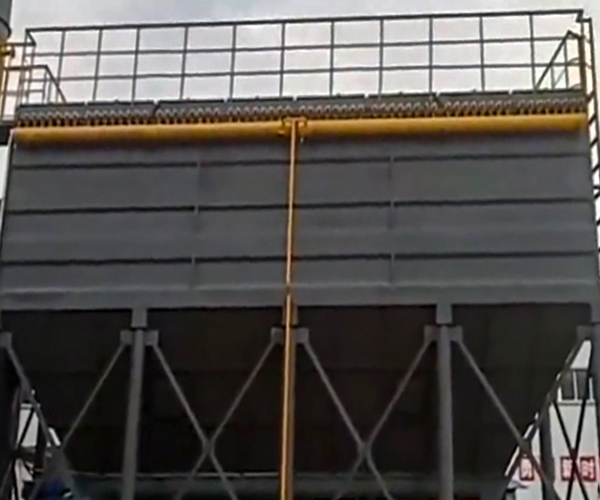
Mining specific dust removal e
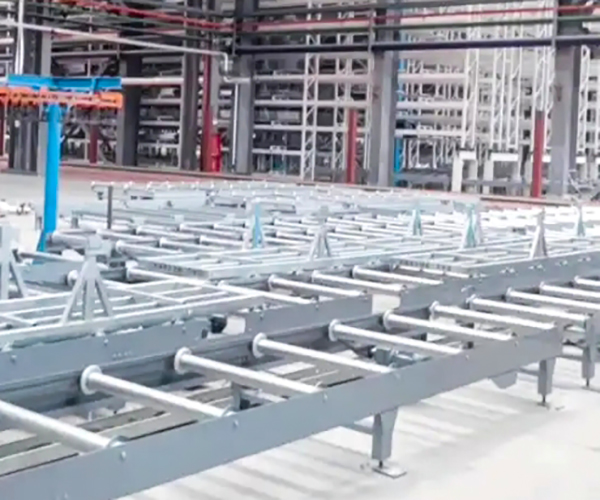
Vertical spraying production l